Gwangjang is the Seoul market most visitors are sent to, and for good reason: it is a dense, lively hall of food stalls where you eat shoulder-to-shoulder at the counter. It is best for a hungry lunch or an early dinner. This guide covers the dishes it is known for, how to order at a packed stall, and how to get there. It pairs with the what-to-eat guide and the Seoul 3-day itinerary.
What to eat here
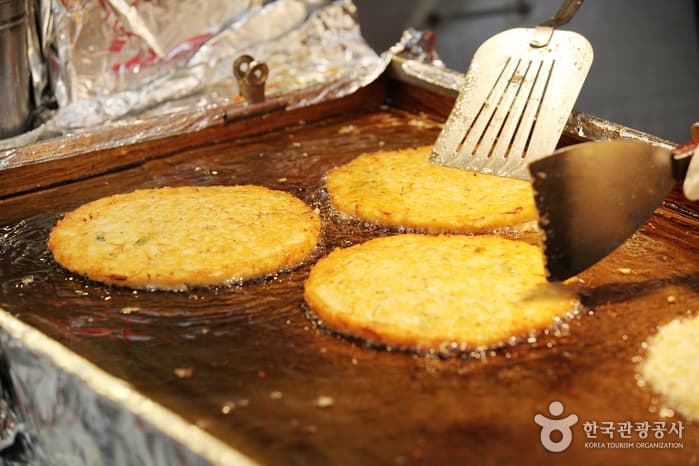
- Bindae-tteok — mung-bean pancakes ground and fried to order; the market's signature.
- Mayak gimbap — small, addictive seaweed rice rolls with a mustard-soy dip.
- Yukhoe — seasoned raw beef, for the adventurous.
- Sannakji — fresh-cut octopus; order only if you know what you are getting.
How to order at a stall
Grab any open seat at a counter and point at what others are eating or at the photos. Pay the stall directly, often in cash. Stalls are small, so order, eat, and free up the seat.
Useful phrases for ordering at a stall
Point as you say these — vendors are used to visitors, and a little Korean goes a long way.
Point at the dish you want as you say it.
Polite이거 하나 주세요
i-geo ha-na ju-se-yo
One of these, please.
Korean audio isn't available on this device or browser — use the romanization above to say it.
Ask the price before you order.
Polite얼마예요?
eol-ma-ye-yo?
How much is it?
Korean audio isn't available on this device or browser — use the romanization above to say it.
Many stalls are cash-only, so check first.
Polite카드 돼요?
ka-deu dwae-yo?
Do you take card?
Korean audio isn't available on this device or browser — use the romanization above to say it.
What it costs
Most plates are inexpensive and meant for sharing across a few stalls. Bring small bills; some stalls take cards, but cash is faster at a busy counter.
How to get there
The market sits between Jongno 5-ga and Euljiro 4-ga stations in central Seoul. Use a T-money card on the subway, and a Korean map app for the exact exit.
Open in a Korean map app (Google Maps transit is unreliable here):
Good to know
It is busiest at lunch and on weekends. Go a little before or after the rush for a seat. Hygiene is generally good, but pick stalls with high turnover.
Sources
- Visit KoreaOfficial tourism site
- Seoul Metropolitan Government Open DataOfficial government site
- Korea Tourism Organization English TourAPIOfficial API
Information is compiled from official sources. Details such as prices, hours, and schedules can change — confirm time-sensitive facts before you travel.
Last verified on
Related guides

What to Eat in Korea — A First-Timer's Food Guide
A starter list of Korean dishes worth seeking out — barbecue, stews, bibimbap, street food, and fried chicken — with how to order, rough prices, and notes for vegetarian and halal travelers.

Korean BBQ Guide — How to Order and Eat It
Korean barbecue is a grill-it-yourself meal of pork or beef cooked at your table and wrapped in lettuce with sides. This guide explains the popular cuts, how to order, how the grilling works, what it costs, and the simple etiquette.

Jensen Huang's Seoul Food Trail — Chimaek, Samgyeopsal, Naengmyeon
When Nvidia's Jensen Huang toured Seoul in June 2026, the food stops — fried chicken and beer, grilled pork belly with somaek, and cold noodles — went viral. This guide separates what was reported (by day, with sources) from a practical, traveler-friendly food route you can actually walk, with realistic alternatives.

Chimaek Guide — Korean Fried Chicken and Beer
Chimaek (치맥) is Korean fried chicken (chikin) paired with beer (maekju) — a casual, shareable night out. Order a whole chicken for two to three people, choose plain fried or a sauce, and eat it while it is hot and crisp.